Pest Control Services Warren County for Preventive Home Care
A house rarely develops a pest problem overnight. What usually happens is quieter than that. A few ants appear near the sink after heavy rain. A mouse slips into the basement once temperatures drop. Wasps start testing the eaves in early spring, long before a visible nest forms. By the time homeowners call in a panic, the warning signs have often been there for weeks or months.
That is why preventive home care matters. The most effective pest strategy is not dramatic extermination after an infestation has taken hold. It is a steady, practical system that makes a property less attractive, less accessible, and less vulnerable. In Warren County, where seasonal shifts, wooded lots, older homes, and moisture swings all play a role, prevention is not a luxury service. It is smart maintenance, right alongside roof inspections, gutter cleaning, and HVAC checks.
Homeowners who look into Pest Control Services Warren County often start with one immediate concern, such as carpenter ants in the kitchen, stink bugs in the attic, or mice in the garage. What they discover, when the work is done well, is that pest control is really about understanding how the house functions. Entry points, drainage, insulation gaps, mulch depth, crawlspace humidity, door sweeps, tree limbs, and food storage all connect. Pest pressure is not random. It follows conditions.
Preventive care starts with the structure, not the spray
One of the biggest misconceptions about pest control is that treatment alone solves the issue. It helps, of course, and in some cases it is necessary right away. But chemical treatment without structural correction is often short lived. If a home has moisture under the deck, open utility penetrations, unsealed sill gaps, and dense vegetation against the foundation, pests will keep returning. The treatment becomes a loop instead of a solution.
A well-run preventive program begins with observation. Where are pests entering. What are they feeding on. What conditions allow them to nest nearby. A good technician does not just identify the insect or rodent. They read the property. That skill matters more than many homeowners realize.
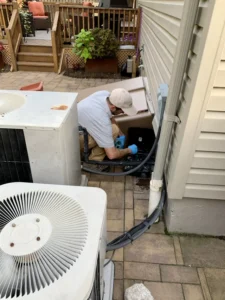
For example, an ant problem in the bathroom may not be a “bathroom problem” at all. It may trace back to a damp wall void caused by a slow exterior leak around a window frame. Mice in the attic may be getting in through a gap around an AC line set on the opposite side of the house. A yellowjacket issue near the patio may be connected to a void beneath a retaining wall or an old rodent burrow in the yard.
Preventive home care works best when it treats the property as a system. It asks not only what pest is present, but why the house is allowing it.
Why Warren County homes face recurring pest pressure
Warren County presents a mix of conditions that can support year round pest activity. Homes near woods, water, fields, or undeveloped lots naturally see more insect and wildlife movement. Older homes can have settling cracks, aging weather seals, and utility penetrations that were never properly sealed. Newer homes may be tighter in some areas but still develop issues where grading, landscaping, or construction details create moisture pockets.
Seasonality also matters. Spring brings ant activity, termite swarms, and wasp scouting. Summer pushes mosquitoes, stinging insects, and occasional pantry pests as food storage and humidity become factors. Fall is prime time for rodents seeking shelter, along with stink bugs and cluster flies looking for overwintering sites. Winter often reveals the pests that entered months earlier, especially mice, rats, and cockroaches in heated interior spaces.
Local weather patterns can intensify all of this. A wet stretch tends to drive insects indoors or closer to foundations. A dry spell can do the same, especially if pests are seeking water sources around kitchens, bathrooms, basements, or condensate lines. Cold snaps compress rodent movement toward warm structures. A single severe season can expose weak spots in homes that seemed fine for years.
This is where Pest Control Services Warren County become more valuable than one-time response work. Local preventive service is not simply about putting product around the perimeter. It is about timing, monitoring, and adapting to the way pest pressure changes across the county and through the calendar.
The pests homeowners most often miss until they become expensive
Some pests announce themselves immediately. Wasps hovering around a porch are hard to ignore. So are mice leaving droppings in a pantry. Others stay hidden until damage is underway, and those are often the ones that cost the most to correct.
Termites are an obvious example, but they are not the only one. Carpenter ants can hollow wet wood over time, especially around window frames, decks, and sill areas. Powderpost beetles can quietly damage susceptible wood in some settings. Rodents chew wiring, contaminate insulation, and create persistent odor issues in enclosed spaces. Even pests that do not destroy the house directly can turn into expensive quality-of-life problems. A minor drain fly issue can point to plumbing or moisture conditions. Cockroaches in a basement utility area can spread to finished spaces if ignored.
What makes these situations frustrating is that homeowners often act responsibly, just not early enough. They clean well. They mow. They store food properly. Yet they miss the hidden vulnerability, a torn crawlspace vent screen, a garage door seal with a half-inch gap, a leaking spigot saturating mulch against the foundation.
A preventive mindset changes the timeline. Instead of waiting for a problem to prove itself, the property is inspected for the kind of conditions that invite one.
What a strong preventive plan usually includes
The best preventive programs are not identical from house to house. A townhouse with little surrounding vegetation has different risks than a farmhouse with outbuildings, mature trees, and a stone foundation. Still, certain core elements show up again and again because they address the most common pathways pests use.
- exterior inspection of foundation lines, door sweeps, windows, rooflines, vents, and utility entries
- identification of moisture sources, including poor drainage, standing water, leaks, and damp crawlspaces
- targeted treatment where activity or vulnerability is highest, rather than broad overapplication
- exclusion recommendations such as sealing gaps, screening openings, trimming contact vegetation, and improving storage practices
- follow-up visits timed to seasonal pressure and the property’s pest history
Notice what is not on that list: a promise that one visit solves every issue forever. Good preventive care is measured and realistic. It reduces risk dramatically, catches changes early, and prevents small issues from becoming established infestations. It does not pretend that insects and rodents stop existing just because a home was treated once in April.
The role of moisture, often the real culprit
If there is one condition that repeatedly drives pest trouble in homes, it is moisture. Not dramatic flooding, necessarily. More often it is chronic dampness in ordinary places. A clogged gutter spills water beside the foundation every time it rains. An Pest Control Services Warren County outdoor hose bib drips steadily into mulch. The crawlspace has poor vapor control. Condensation forms around an HVAC line. Firewood stays wet against the siding.
Moisture supports more than one kind of pest. Ants, especially carpenter ants, are strongly drawn to softened wood and damp voids. Silverfish and centipedes thrive in humid basements. Cockroaches need water and often stay close to it. Mosquitoes can breed in surprisingly small amounts of standing water. Termites are closely tied to moisture conditions around the structure.
I have seen homes where repeated pest treatment brought only partial relief until the drainage issue was fixed. Once downspouts were extended, mulch was pulled back, and a low-grade area was corrected, the insect activity dropped sharply. Not because the pests vanished on their own, but because the house stopped offering such favorable conditions.
That is why preventive pest care overlaps with building maintenance. The best outcome often depends on small repairs that have nothing glamorous about them.
Rodent prevention is mostly about inches, not acres
People often imagine rodent problems begin because a home sits near woods or fields. That can contribute, but location alone is rarely the deciding factor. The actual deciding factor is usually a gap. Mice can fit through openings roughly the size of a dime, sometimes smaller depending on the edge and shape. Rats need more space, but not much more than many homeowners expect.
This is where precision matters. You can have a spotless kitchen and still get mice if the garage door corners are worn and the utility room has unsealed penetrations. Likewise, a home can sit on a large lot without rodent trouble if exclusion is thorough and food sources are controlled.
Rodent prevention tends to work best when homeowners focus on the practical details that are easy to postpone. Pet food should not stay out overnight in accessible areas. Bird seed needs secure storage. Clutter in basements and garages should be reduced enough to make inspection possible. Exterior Pest Control Services Warren County gaps should be sealed with durable materials, not temporary foam alone where chewing is likely. If an attic or crawlspace has active signs, the nesting source should be addressed, not just the visible droppings removed.
When Pest Control Services Warren County are called for rodents, a good provider should be able to distinguish between occasional intrusion and established interior activity. Those are different situations, and they require different levels of response.
Stinging insects reward early action
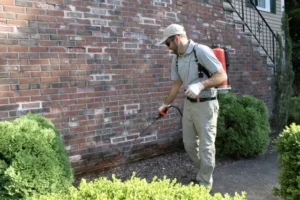
Wasps, hornets, and yellowjackets are among the most avoidable seasonal headaches because early action is so effective. Small spring nests are far simpler to manage than mature late-summer colonies. Homeowners often notice increased activity only after the nest has grown large enough to create conflict around doors, decks, play areas, or rooflines.
Eaves, shutters, soffits, attic vents, deck framing, sheds, and fence posts all deserve periodic attention during the warmer months. Ground-nesting yellowjackets are especially troublesome because they are easy to disturb by accident while mowing or gardening. Their nest entrances can be subtle, often no more than a small opening in soil near landscaping or retaining features.
Preventive service is useful here not only for treatment but for pattern recognition. Properties that host stinging insects one year often have repeat-prone zones the next. A technician who has already worked the property can watch those spots early and intervene before the problem escalates.
Homeowners should be particularly cautious if anyone in the household has a sting allergy. In that case, preventive monitoring around entrances, patios, and play spaces carries even more value.
Preventive care for families, pets, and day-to-day living
Many homeowners hesitate to schedule ongoing pest service because they worry about unnecessary treatment around children or pets. That concern is reasonable, and it is one more reason the quality of the provider matters. Responsible preventive pest control is not about saturating a property. It is about selecting methods carefully, using the least invasive effective approach, and focusing on inspection and exclusion as much as application.
A professional should be able to explain where treatment is being placed, why it is being used, and what precautions matter after service. If they cannot do that clearly, that is a problem. Homeowners deserve plain language, not vague reassurance.
The most successful preventive programs usually combine several tactics. Limited targeted products may be part of the plan, but so are mechanical changes, sanitation improvements, and habitat reduction. This balanced approach protects the home without treating pest control as a one-dimensional chemical service.
Choosing a provider with preventive judgment
Not every pest control company approaches homes the same way. Some are set up for speed and volume. Others are built around inspections, follow-up, and property-specific planning. If your goal is preventive home care, the second model tends to serve you better.
A useful first conversation should sound less like a sales pitch and more like a diagnostic discussion. What pests have been seen. When did activity begin. Has weather changed recently. Is the home on a slab, basement, or crawlspace. Are there pets, children, gardens, or drainage issues. Have there been previous repairs or repeated problem areas.
Those questions matter because they reveal whether the company is thinking beyond a standard spray pattern.
When comparing Pest Control Services Warren County, it helps to ask a few direct questions:
- how the company handles inspection, exclusion guidance, and seasonal follow-up
- whether service plans are customized for the property type and pest history
- what pests are commonly covered, and what situations require separate treatment
- how technicians communicate safety precautions and treatment locations
- what happens if activity appears between scheduled visits
A strong answer is usually specific, calm, and free of overpromising. Pest control is practical work. Companies that guarantee a perfectly pest-free life under all conditions are often selling an illusion.
Homeowner habits that make prevention work better
Professional service goes much further when the homeowner supports it with a few consistent habits. These do not need to become a second job. The point is to remove the easy wins that pests rely on.
Keep gutters flowing and direct downspouts away from the foundation. Avoid stacking firewood against the house. Trim shrubs so they do not hold moisture on the siding or create sheltered pathways to eaves and rooflines. Repair torn screens and worn sweeps promptly. Check garages, basements, and utility rooms a few times each season rather than waiting for a visible problem.
Inside the home, food storage and clutter management are still important, but they should not be treated as the whole story. A spotless kitchen will not stop ants if a wall void is wet. At the same time, fixing a gap will not fully solve a mouse issue if accessible food remains in the garage. Prevention works when both the building and the housekeeping side are handled together.
One detail homeowners often overlook is monitoring after weather events. Heavy rain, wind damage, and sudden temperature drops can all change pest behavior and expose new vulnerabilities. A quick walk around the exterior after a storm can reveal issues before pests exploit them.
The long-term value of prevention
Preventive pest care is easy to underestimate because its success is measured in what does not happen. No major rodent cleanup in the attic. No surprise yellowjacket nest beside the patio furniture. No carpenter ant colony spreading through damp trim. No escalating ant trails every spring because the original moisture source was never addressed.
From a cost perspective, prevention is usually easier to defend than remediation. Sealing entry points, correcting drainage, and maintaining periodic service often costs far less than replacing chewed wiring, contaminated insulation, damaged wood, or repeatedly treating a reinfesting problem. Even when the numbers are not dramatic, the reduction in disruption matters. Families want to use their kitchens, basements, porches, and storage spaces without wondering what is moving behind the wall or under the eaves.
There is also a less obvious benefit: preventive care creates a record of the property’s behavior over time. A technician who sees the home season after season notices patterns. They remember that the back corner stays wet in spring, that mice pressure rises near the detached garage in fall, or that paper wasps favor the west-facing eaves by early June. That kind of continuity improves results.
For homeowners in Warren County, that local pattern awareness can be just as important as the treatment itself. Homes are not abstract boxes. They sit in real landscapes, with specific weather exposure, vegetation, drainage, and construction quirks. Pest control that respects those details is the kind that prevents problems instead of chasing them.
Preventive home care is rarely about one dramatic fix. It is about catching the half-inch gap, the damp sill, the clogged gutter, the early nest, the overlooked vent screen. Those are small things until they are not. With the right service approach, they stay small. That is the real promise behind effective Pest Control Services Warren County, not a flashy claim, but a well-maintained home that gives pests fewer and fewer chances to settle in.
Affordable Pest Solutions LLC
Budd Lake, NJ 07828 (service-area business)
Serving Warren, Morris and Sussex Counties, New Jersey
Phone: +1 973-229-9547
FAQ About Pest Control Services Warren County
How much does pest control cost in NJ?
The cost depends on the pest, the size of the property, the extent of activity and whether follow-up visits are needed. Ask for an inspection and a written estimate that explains the treatment scope and any ongoing service charges. Affordable Pest Solutions offers free estimates for properties in its service area.
What are the most common household bugs in New Jersey?
Ants, cockroaches, stink bugs and spiders are among the pests that residents may encounter in New Jersey homes. Activity varies by season, moisture conditions and available entry points. Correct identification helps determine whether exclusion, sanitation, monitoring or professional treatment is appropriate.
What kind of bugs infest homes?
Ants, cockroaches and termites can establish persistent activity in or around homes. The signs and appropriate response differ by pest: trails, droppings, shed wings or damaged wood may warrant closer inspection. A pest professional can identify the cause and recommend a plan suited to the property.